Interview with Christoph Zabinski
Between Code and Community: Working at Qnit
Test Architect
How long have you been part of Qnit, and how has your role evolved during that time?
I have been part of the QA Team now for 10 years. Within these I filled out different roles like Test Manager, Requirements Engineer, Senior Test Automation Engineer and Test Architect of which the latter ones are my main and favorite roles.
You are one of our experts in AI and GitHub Copilot – how are these technologies changing the way we approach test automation?
The first thing I want to acknowledge is the increase in human learning speed. You can virtually ask anything and have anything explained. Exploring concepts and ideas without the burden of getting hung up on details significantly increases productivity and shifts the focus towards the idea you want to realize.
Many parts of automation frameworks involve repetitive patterns: creating selectors, writing basic assertions, or scaffolding test structures. AI can generate much of this quickly. This reduces the mechanical effort of writing tests and allows engineers to spend more time on the aspects that matter most – such as identifying risks, defining meaningful test coverage, and designing maintainable automation architectures.
We move away from the HOW towards WHAT I want to implement-test. However, in that also lies the danger of a growing cognitive dept that shouldn’t be disregarded. Systems become faster and more complex with us losing track of how it works.
What do you enjoy most about working at Qnit?
Honestly, it’s the people. The relationships I’ve built and the way Qnit really focuses on community make a big difference. It creates an environment where you don’t just work alongside each other, but actually connect, exchange ideas, and grow together.
What’s one fun fact about you that people at Qnit might not know?
Something people might not know is that I also work on video productions in my spare time. I collaborate on creating educational YouTube content about training, rehabilitation, and nutrition, where I handle filming, editing, and visual storytelling.
How does Qnit support innovation and experimentation with new technologies like AI?
At Qnit, we’re consistently encouraged to invest in our own learning—whether that’s through official certifications or simply exploring new tools and technologies we’re interested in. That naturally extends to AI as well. We see a clear need to understand how AI can support us both in our daily work and beyond. To make this more structured, we’re currently building an internal AI adoption group where we actively explore how these technologies are evolving and what that means for our work. The goal is not just to experiment, but to turn those insights into practical knowledge we can apply in projects.


More Interviews

My Journey as a Test Specialist at Qnit
What makes Qnit truly special is the people. I really value how my colleagues are always ready to listen, support, and help each other. This kind of genuine collaboration and mutual support creates a unique work environment where everyone can grow and succeed together.

My Role, Growth, and Highlights at Qnit: An Automation Engineer’s Perspective
Although I have not been at Qnit for long, I have significantly improved my skills. I have learned more about test automation with Tosca and developed a better understanding of various testing methods. Additionally, I have learned to analyze test data and identify errors, which helps me make improvements. Working with my colleagues has provided valuable insights.
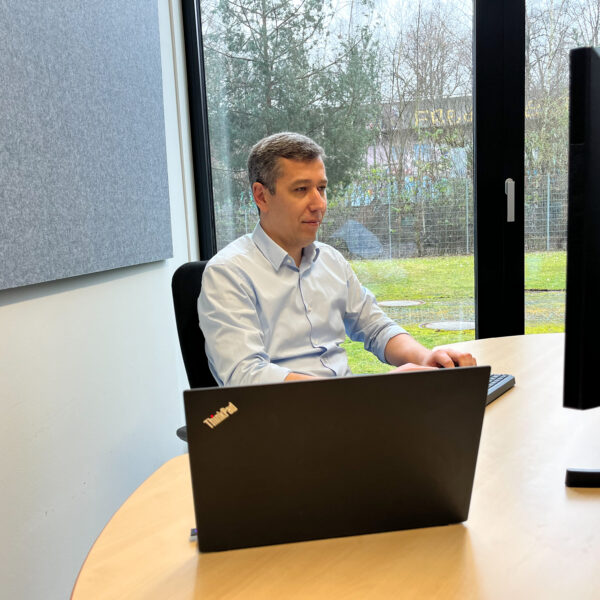
Shaping Quality with Expertise: An Insightful Interview with our Test Architect
The most exciting project I’ve worked on was setting up the test automation infrastructure for three teams and more than 10 projects across different areas, including SAP, Mobile, Frontend, and Backend. Working together with my Qnit colleagues, we were able to implement best practices in test automation right from the beginning.